C-Sections… Finding The Balance
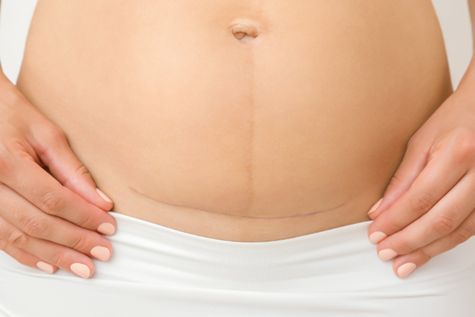
For thousands of years women have been delivering babies without access to cesarean sections… This is the beginning of many arguments on social media. Typically, the reply tends to be something along the lines of “Yeah, well babies and mothers used to die in childbirth at a huge rate!” Que up the rage tweeting and sit back and watch (preferably with some popcorn lol) as the internet trolls begin to clobber one another in a glorious battle that results in nothing more than everyone backing into their own corners…
The truth ultimately (as in many situations in life) does in fact lie somewhere in the middle between these two camps and ultimately both sides have kind of missed the point while arguing with one another.
So, What Exactly Is a C-Section?
A C-section is technically called a Cesarean section and typically has subcategories depending on the type of cut that is made on the uterus (most commonly is what is called a Low-Transverse incision). This is a major abdominal surgery that is performed where all the layers of a mother’s belly are cut through until the baby is reached then the baby is delivered through the cut (bypassing the vaginal canal) then the layers of the mother’s belly are carefully put back together. I like to refer to the surgery as vaginal bypass surgery (as this is much more descriptive).
Why We Perform C-Sections
Now that we understand the basics of what a C-section is, let’s talk about why they are performed. There is a WIDE range of reasons why a mother may need a C-section.
The position of the baby such as a breech (butt or feet down) or transverse (baby laying sideways). In these situations we have evidence to guide us that tells us that risks of permanent injury to the baby or the mother are high enough that a C-section would be the safer.
The baby being too big (we will eventually have a whole post about that one…)
Issues with the placenta (location or functionality)
Labor course issues (the cervix refusing to dilate or the baby not being able to be pushed out)
Ultimately, the majority of cesareans today are performed for abnormalities of the fetal heart rate tracing (many blog posts to come regarding the safety and use of the fetal monitor) that has recently been rated as one of the least reliable tools in medicine.
I won’t spend much time on this post discussing the short-falls of the fetal monitor, but basically it hasn’t really helped to reduce harm to babies and it has increased cesarean section rates dramatically. I promise I will have future blog posts with more details about this.
Access to C-Sections Saves Lives
Moving on from the indications we should probably talk about why access to cesareans is vital for patient safety. Probably one of the easiest ways to demonstrate the need for cesareans is to look at areas of the world that don’t have access to cesarean sections. When we look at these areas what we find is a very high rates of still birth and very high rates of mothers dying or being permanently injured during child birth. It is notable that these areas of the world also suffer from many other things that contribute to the high rates of these negative outcomes (limited access to blood transfusion, nutritional gaps, transportation access, antibiotic access, and many other things) that complicate the picture thus it is unlikely that lack of access to cesareans is responsible for the entirety of these increases, but certainly access to cesarean sections would significantly reduce theses negative outcomes.
The Other Side: Risks of Overuse
A C-section is a wonderful tool, but it is important for us to note the dangers of cesarean sections and their overuse. We should never forget that this is major abdominal surgery and should only be undertaken when the benefit is reasonably clear and expected. The easiest things to discuss are the immediate risks of surgery. What I a m referring to are things like: infections (this is why we give antibiotics for C-sections), injury to bowel or bladder (very uncommon), blood clots (we do things to prevent these), increased risks of bleeding needing transfusion, and ultimately super rare things like death and severe reactions to surgery medications. We can look to parts of the world (such as Brazil) where Cesarean section rates can be as high as 65% to see that their populations do indeed have higher rates of these outcomes. In the long term the risks of a cesarean sections include significant impacts on future pregnancies.
Future pregnancies are complicated by:
Higher rates of repeat cesarean sections, as not all patients have access to TOLAC/VBAC or there are reasons they can’t/won’t pursue a vaginal delivery.
Higher rates of placentas that are in the wrong place (placenta previa)
Most alarmingly we see significantly increased rates of stuck placentas (placenta accreta). These stuck placentas can be very dangerous and have resulted in increasing rates of emergency surgeries, blood transfusions, and rarely deaths for mothers. I won’t spend too much more time on these things today, but for sure a future post will be dedicated to this topic.
Finding the Balance
So, what do we do with all of this?
After understanding what a cesarean is, why we do them, why they are important, and why they can be dangerous if overused that brings us ultimately to the question of what do we do with all this information. First, I think it helps us to understand that cesarean sections are NOT the devil and do save lives. Second, as with many things in life, more is not better. In good clinical practice a healthy dose of caution should always be used when making the decision to proceed with cesarean delivery. As doctors, we should be very judicious in our use of cesarean delivery and decisive in the presence of clear indications. Generally, there is a balance of too few and too many C-sections. In my practice and my experience and generally supported by the data at large we should be trying to keep our cesarean rates somewhere between 10-20% or roughly 1-2 out of every 10 deliveries. That’s the sweet spot.
Final Thoughts
Every birth story is unique. Our goal isn’t to make birth fit one ideal — it’s to make it safe. We believe in judicious and decisive use of cesarean sections always keeping our patients at the center of care.
At Calhoun Women’s Center, we believe in honoring both science and experience. Whether your delivery is vaginal or cesarean, our commitment is the same: compassionate, evidence-based care that puts you and your baby first.
